
Ceramic Coil vs Mesh Coil – Which Is Right?
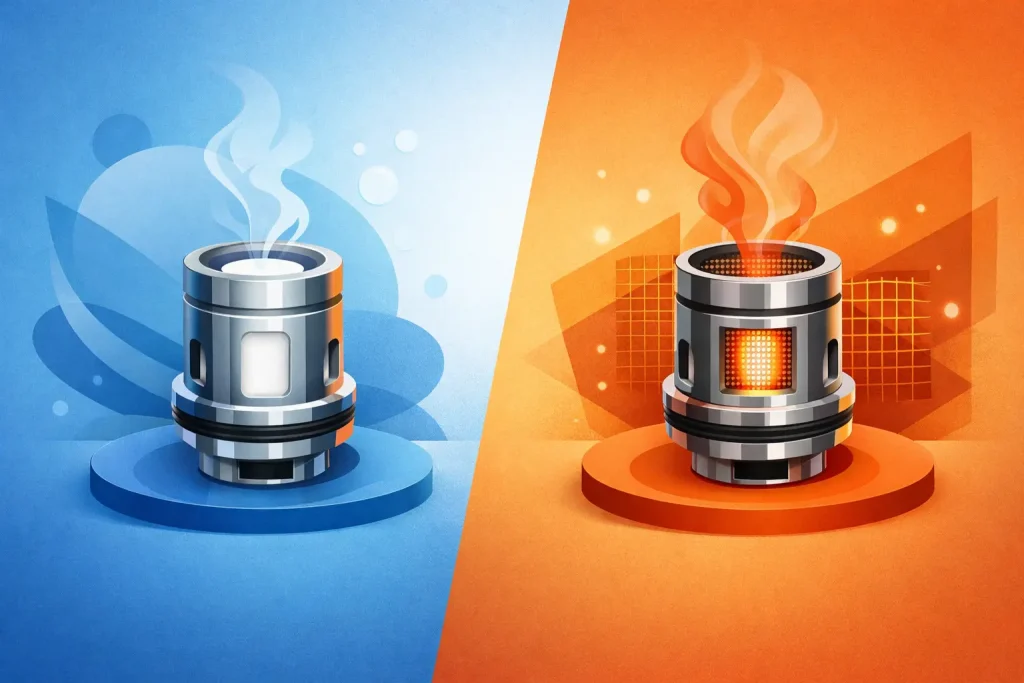
A burnt taste halfway through the day, weak flavour from a fresh pod, or a coil that drains your e-liquid faster than expected usually comes down to one thing: the heating setup. In the ceramic coil vs mesh coil debate, neither option wins for every vaper. The better choice depends on your device, the e-liquid you use and whether you prioritise clean flavour, bigger clouds, low maintenance or lower running costs.
The first rule is simple: always buy replacement coils made for your exact vape tank, pod kit or device. A coil may look similar but still fit incorrectly, fail to fire or perform poorly. Check the coil name, resistance and compatibility information before adding replacements to your basket.
Ceramic coil vs mesh coil: the key difference
A mesh coil uses a thin strip of metal with tiny openings across its surface. Rather than heating one narrow wire, it spreads heat over a larger area. This gives the e-liquid more contact with the heated metal, which is why mesh coils are widely chosen for strong flavour and fast vapour production.
A ceramic coil uses porous ceramic material in or around the heating system. In many designs, the ceramic acts as a wick or heating chamber that absorbs e-liquid and releases it steadily towards the heating element. Ceramic is valued for its heat resistance and its ability to deliver a smooth, controlled vape.
This is not always a like-for-like comparison. “Mesh” describes the shape of the heating element, while “ceramic” can describe the material used in the wick or coil construction. Some pod systems use ceramic components alongside metal heating elements. That is why compatibility and the manufacturer’s stated design matter more than a headline label alone.
Flavour: sharp intensity or steady clarity?
Mesh coils are known for immediate flavour. The wide heating surface vaporises e-liquid quickly and evenly, especially when the coil is properly primed. Fruity, dessert and ice flavours can feel fuller and more pronounced, while the vapour is often warmer at higher wattages.
Ceramic coils tend to provide a softer, cleaner flavour profile. Many users like them for everyday vaping because the taste can remain consistent over repeated draws, without the more aggressive warmth some high-output mesh setups create. If you prefer a measured mouth-to-lung draw from a compact pod device, ceramic may suit you well.
There is a trade-off. A mesh coil can offer more dramatic flavour, but it can also expose an overly sweet e-liquid or a coil running too hot. Ceramic can feel gentler, although some vapers find it less punchy at the first inhale. The e-liquid itself matters just as much as the coil. A heavily sweetened liquid can shorten the life of either type, while a cleaner formulation is generally easier on your hardware.
Vapour production and draw style
For larger vapour clouds, mesh is normally the stronger option. Its broader heating area works particularly well in sub-ohm tanks and direct-to-lung devices, where airflow is open and power settings are higher. The result is a dense, smooth inhale with plenty of visible vapour.
Ceramic coils are more commonly associated with lower-power pod systems and tighter mouth-to-lung draws. They can still make satisfying vapour, but that is not usually their main purpose. Their appeal is controlled output, portability and a vape that does not require high wattage or wide-open airflow.
If you are moving from smoking and want a discreet, straightforward setup, a compatible ceramic pod coil can be a sensible fit. If you already use a tank with adjustable airflow and enjoy a more open inhale, mesh replacement coils are likely to feel more satisfying. Do not force a low-resistance mesh coil into a vaping style you do not enjoy simply because it is popular.
Coil lifespan: what really affects it
Ceramic has a reputation for lasting well because it handles heat effectively and absorbs e-liquid gradually. In real use, its lifespan still depends on how you vape. Chain vaping, running a nearly empty pod, using very sweet e-liquid and failing to prime a new coil can all cause early flavour loss or burning.
Mesh coils can also last well, particularly when the larger heating surface avoids concentrated hot spots. However, their stronger output can mean more e-liquid passes through the coil over a day. If you vape frequently at higher wattage, you may use more liquid and need replacement coils sooner than you would with a low-power pod.
Instead of choosing on lifespan claims alone, look at your habits. A lower-power ceramic coil may be the more economical option for light or moderate daily use. A mesh coil may cost more in e-liquid consumption, but deliver the richer flavour and vapour you actually want. Value is not just the price of a coil – it is whether it gives you a satisfying vape for the way you use it.
How to help any coil last longer
Prime every new coil before use. Add e-liquid to the visible cotton ports where applicable, fill the tank or pod, then leave it for several minutes so the wick is fully saturated. Start at the lower end of the recommended wattage range and increase gradually if your device allows it.
Keep the tank topped up, especially if you use a high-power mesh coil. Avoid taking repeated long draws without a short pause, as this gives the wick less time to absorb more liquid. When flavour tastes dull, harsh or burnt, replace the coil rather than turning up the power. More wattage will not repair a damaged wick.
E-liquid choice matters more than many people think
The thickness of your e-liquid should match the device and coil. High-VG e-liquids are thicker and are generally suited to larger-wicking, sub-ohm mesh coils. They support bigger vapour production but may struggle to wick efficiently in a small, low-power pod.
Higher-PG and 50/50 e-liquids are thinner, making them a common choice for mouth-to-lung devices and many ceramic pod coils. They can provide a clearer throat hit and are less likely to overwhelm compact wicking ports. Always follow the guidance supplied with your tank, pod or coil range.
Nicotine strength also affects the experience. A powerful mesh setup produces more vapour per draw, so a lower nicotine strength is often preferred by direct-to-lung users. Compact ceramic pod systems may suit a higher strength within legal UK limits because each draw usually produces less vapour. Choose a strength that feels comfortable, not one that causes coughing or dizziness.
Which should you buy?
Choose a ceramic coil if you want a compact, lower-power vape with steady flavour, a tighter draw and straightforward everyday use. It can be a particularly good match for pod kits and mouth-to-lung vaping, provided the coil is designed for your device.
Choose a mesh coil if flavour intensity, warmer vapour and larger clouds are your priority. Mesh is usually the better fit for sub-ohm tanks, adjustable vape kits and direct-to-lung vaping. It is also a strong option when you want a more responsive, fuller inhale from your favourite e-liquid.
There is no benefit in swapping coil types unless your device supports them. Many vape ranges are designed around one specific coil family, and that engineering is there for a reason. Check your existing coil before ordering, then choose the resistance and style that matches your preferred wattage and draw.
Recommended Products
Start with compatible replacement coils for your current tank or pod rather than guessing based on appearance. If your device supports mesh options, choose the manufacturer-approved mesh resistance that matches your preferred wattage range. For a tighter pod-style vape, select the correct ceramic or standard pod coil listed for that exact kit.
It is also worth keeping spare coils and suitable e-liquid ready at home. Replacing a coil as soon as flavour drops keeps your vape tasting right and avoids the temptation to keep using a burnt coil. Easy Vapes stocks a broad range of vape accessories, replacement coils, tanks, pod kits and e-liquids, making it easier to pick up the essentials in one order.
FAQs
Is mesh better than ceramic for flavour?
Mesh often produces stronger, more immediate flavour because it heats a larger surface area. Ceramic can deliver a smoother and more consistent flavour, particularly in lower-power pod systems. Better depends on whether you want intensity or a gentler everyday vape.
Can I use any mesh coil in my vape tank?
No. Use only coils specifically made for your tank or pod system. Check the product name, resistance and compatibility details before ordering. Using the wrong coil can lead to leaking, poor performance or a device that will not work.
Why does my new ceramic or mesh coil taste burnt?
The most common cause is insufficient priming. Let the new coil soak after filling, keep enough e-liquid in the tank and begin at a lower wattage. A burnt coil normally needs replacing, as the damaged wick will not return to normal.
Your best coil is the one that makes every draw feel right for your device and routine. Check compatibility first, match the e-liquid to the coil, and keep a spare ready so a flat flavour never interrupts your day.