
Vape Battery Safety: 9 Habits That Prevent Trouble
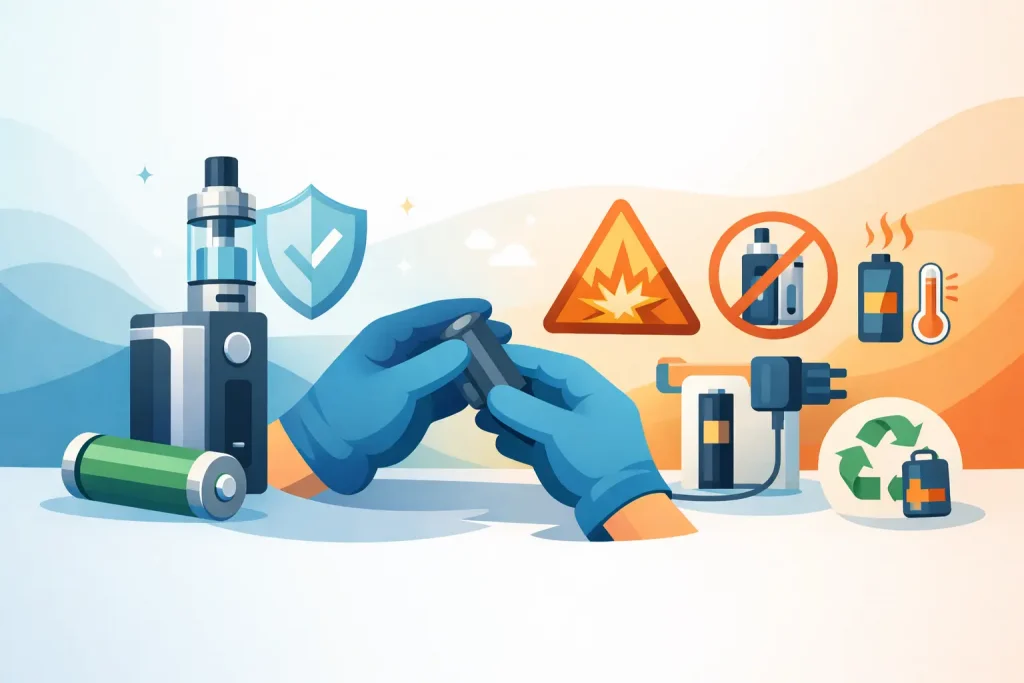
A loose battery in the same pocket as keys or coins can cause a serious problem in seconds. Good vape battery safety is not about making vaping complicated – it is about treating lithium-ion cells with the same care you would give any high-energy electrical item. A few practical habits can protect your device, your belongings and, most importantly, you.
Whether you use a compact vape with a built-in battery or a more advanced mod with removable cells, the basics are straightforward. Buy suitable equipment, charge it sensibly, inspect it regularly and replace damaged parts rather than hoping they will be fine.
Why vape battery safety matters
Lithium-ion batteries are compact and powerful. That is why they work so well in vape kits, but it is also why they must not be crushed, overheated, short-circuited or charged with unsuitable equipment. When a battery is damaged or misused, it can vent hot gas, leak or fail suddenly.
The risk is usually avoidable. Most incidents involve preventable mistakes: carrying bare batteries loose, using a torn battery wrap, charging overnight without supervision, exposing a device to heat, or using the wrong charger. The aim is not to worry every vaper, but to make the safe option the normal routine.
Built-in battery devices remove some of the choices around external cells, while removable-battery mods give experienced users more flexibility. Neither type is automatically risk-free. The right choice depends on how you vape and whether you are willing to keep up with the extra checks required by removable batteries.
1. Use the correct charger and cable
For a vape with an internal battery, use the cable supplied with the device where possible and charge from a reliable USB power source. A quality mains adaptor is generally preferable to an old, damaged or unbranded plug. Do not use a frayed cable, loose connector or charger that becomes excessively hot.
For removable batteries, an external charger is often the better option. It allows each cell to be charged in a dedicated bay and makes it easier to see when charging is complete. Choose a charger designed for the battery type and size you use, and follow its instructions rather than selecting settings at random.
Fast charging can be convenient, but slower charging is usually gentler on battery life. If your charger offers a choice of charge current, do not assume the highest setting is best. A sensible, compatible setting is the safer everyday choice.
2. Never leave a battery charging unattended
Charge your vape on a hard, clear surface away from curtains, bedding, papers and other flammable items. A kitchen worktop or clear table is far safer than a sofa arm, carpet or bedside cabinet. Keep it away from children and pets while it is connected.
Avoid charging while you sleep or when you are out of the house. Modern devices include safety features, but no electronic product should be left unattended for hours simply because it has worked without issue before. Once charged, disconnect it rather than leaving it permanently on charge.
If a battery, charger or device becomes unusually hot, smells odd, makes a hissing noise, swells or leaks, stop using it immediately. Move away from it if safe to do so, keep it clear of anything combustible and do not try to charge it again.
3. Keep removable batteries in a proper case
Never carry spare vape batteries loose in a pocket, bag, glove compartment or drawer. Keys, coins and other metal items can touch both ends of a cell and create a short circuit. That can cause the battery to heat up extremely quickly.
A rigid plastic battery case is a low-cost essential, not an optional accessory. Store each spare battery separately and keep the case clean, dry and firmly closed. This is especially useful when travelling, commuting or carrying more than one spare cell.
Avoid keeping batteries in direct sunlight, near radiators or in a hot car. Heat shortens battery life and can turn a safe storage situation into an unsafe one. If your device has been left in a freezing or very hot place, allow it to return to room temperature before charging or using it.
4. Check wraps and contacts before use
The coloured outer wrap on a removable battery is an insulating layer. If it is torn, nicked, worn around the top edge or peeling away, do not put that battery back into your mod. Even a small tear can expose metal and increase the chance of a short circuit.
Look at the top insulating ring too. If it is missing, split or out of position, stop using the cell until it has been professionally rewrapped or safely replaced. Do not cover damage with ordinary tape and assume it is repaired.
Check the battery contacts inside your vape kit as well. Keep the compartment clean and dry, and remove e-liquid residue carefully with a dry cloth. If your mod has a damaged battery door, loose contact or visible corrosion, it needs attention before use.
5. Use matched batteries in dual-battery mods
If your mod uses two or more removable batteries, use matched cells. They should be the same brand and model, bought at the same time, with the same capacity and charge level. Keep them together as a set and rotate them together.
Do not mix an older battery with a new one, or pair cells with different ratings. One battery may work harder than the other, which creates uneven strain. Marking paired batteries with a small number or label can help you keep sets organised.
It also makes sense to replace a set together when it is time to retire it. Battery performance declines naturally with repeated charging, so mixing a tired cell with a fresh one is a false economy.
6. Know when a battery needs replacing
A battery does not have to look damaged to be past its best. Shorter run time, a sudden drop in charge, excessive warmth during normal use or charging, and inconsistent performance can all be signs that a cell is ageing.
Replace batteries from a reputable vaping retailer rather than choosing the cheapest unverified cell from an unknown marketplace. The printed capacity and discharge rating on poor-quality or counterfeit batteries cannot always be trusted. For regulated vape kits, use batteries suitable for the device and its power requirements.
If you are unsure which replacement battery suits your kit, check the device manual first. Do not guess based on physical size alone. Cells that look similar may have very different limits.
7. Avoid damage from drops, water and e-liquid
A dropped vape may still switch on, but that does not guarantee the battery is unharmed. Inspect it after a hard impact, particularly if the casing is cracked, the battery door no longer closes securely or the device starts behaving differently.
Keep your kit dry. Water and e-liquid can interfere with electronics and battery contacts. If e-liquid leaks into the battery compartment of a removable-cell mod, remove the batteries if it is safe to do so, dry the compartment fully and inspect the cells before using them again.
Do not use a device with a swollen battery or distorted casing. Do not pierce, crush or attempt to open an internal battery device to investigate the issue. Replace the device through the appropriate route instead.
8. Use settings your batteries can handle
Advanced mods allow you to change wattage, resistance and other settings, but more power creates more demand on the batteries. Chasing large clouds with unsuitable cells or very low-resistance builds can push equipment beyond its safe operating range.
If you are new to adjustable devices, start with the coil manufacturer’s recommended wattage range and keep your settings sensible. Built-in safety protections are useful, but they are not a replacement for compatible batteries, undamaged wraps and common sense.
Mechanical mods require a much higher level of battery knowledge because they do not offer the same electronic protections as regulated devices. They are not the best starting point for a new vaper. If you use one, you need a clear understanding of battery limits and coil safety before firing it.
9. Recycle old batteries properly
Do not put vape batteries in household rubbish or ordinary recycling. Damaged or discarded lithium-ion cells can cause fires in bins, collection vehicles and sorting facilities. Keep retired batteries in a case or cover the terminals until you can take them to a suitable battery recycling point.
Many UK shops and recycling facilities accept small batteries. Built-in battery vapes should also be disposed of through the correct electrical recycling route, rather than being thrown away with general waste.
Recommended Products
For everyday protection, a rigid battery case is one of the most useful accessories to add to your order, especially if you carry spare removable cells. It prevents loose batteries from contacting keys, coins and other metal items when you are out and about.
A dedicated external battery charger is a practical upgrade for removable-battery vape kits. It gives you a controlled place to charge compatible cells and helps you keep an eye on charging progress rather than relying on unsuitable USB accessories.
When your existing cells no longer hold charge reliably, choose replacement vape batteries that match your device requirements. Pair them correctly in dual-battery kits, and replace matched sets together for more consistent performance.
Frequently asked questions about vape battery safety
Can I charge my vape overnight?
It is better not to. Charge when you are awake and able to check on the device, then disconnect it once charging is complete. Keep it on a clear, non-flammable surface while charging.
Is it safe to carry a spare vape battery in my pocket?
Only if it is inside a proper protective battery case. Never carry a bare battery loose beside coins, keys or any metal object.
Can I use a battery with a small tear in the wrap?
No. Stop using it until it has been safely rewrapped by someone competent or replaced. A damaged wrap can expose metal and create a short-circuit risk.
Why does my vape get warm while charging?
A little warmth can happen, but excessive heat is not normal. Disconnect the device if it becomes very hot, smells unusual, swells or performs erratically, and do not charge it again until the issue has been resolved.
A vape battery should make your kit useful, not something you have to think about constantly. Put the right charger and a protective case into your routine, inspect your cells before use, and replace anything damaged without delay. Those small habits are the best value safety upgrade you can make.